The next AI infrastructure bottleneck is not just electricity. It is accountability.
On May 7, Maryland's Office of People's Counsel filed a complaint at the Federal Energy Regulatory Commission against PJM Interconnection, the regional grid operator serving all or parts of 13 states and Washington, D.C. The complaint says PJM's transmission-cost rules assign Maryland customers about $2.001 billion in capital costs and about $1.621 billion in ten-year revenue requirements for projects OPC says are driven primarily by data-center load growth outside Maryland.
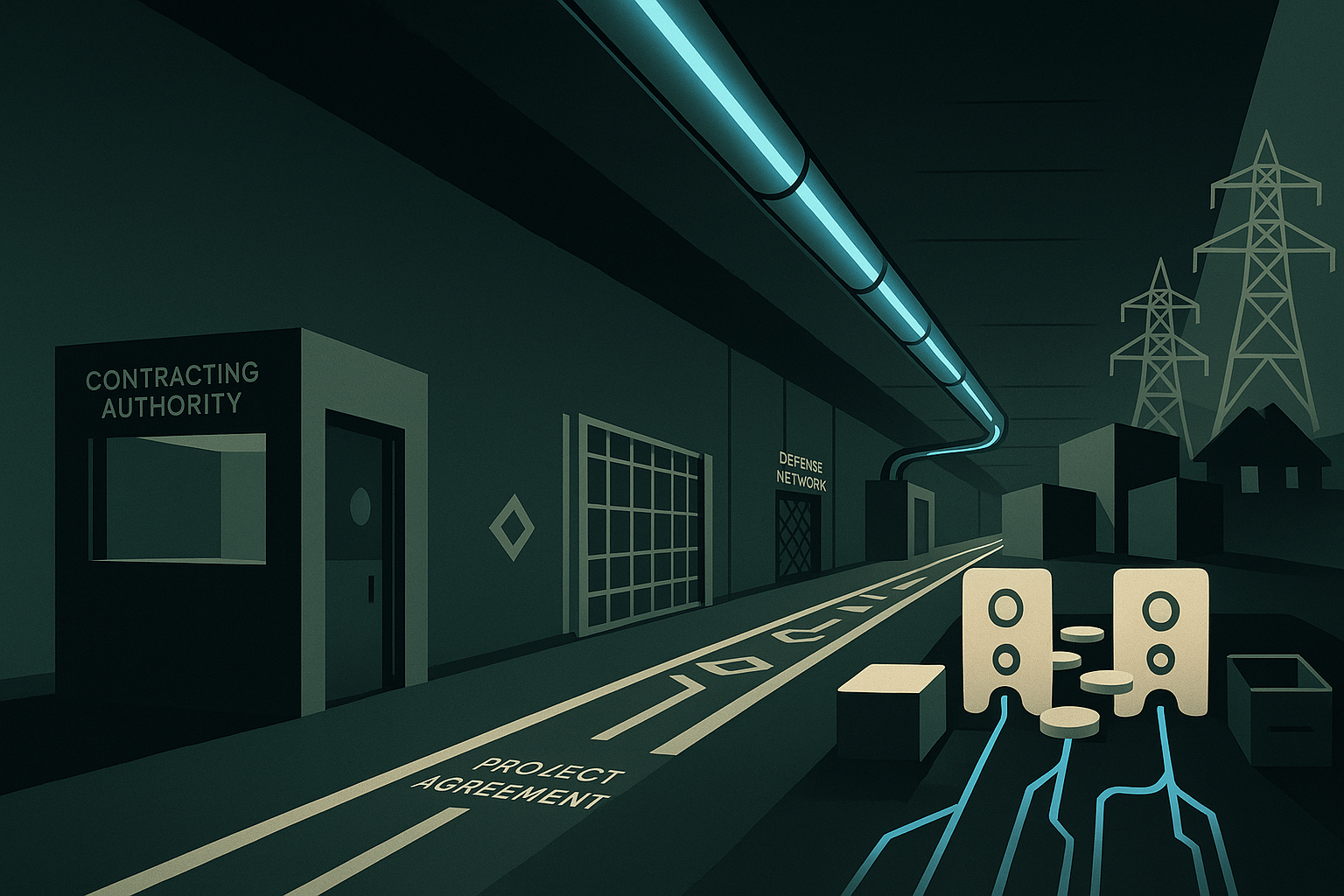
The thesis: AI capacity plans now need a cost-routing layer. If the industry cannot explain which data centers caused which grid upgrades, who pays, and how unused forecast capacity is handled, the constraint moves from megawatts to legitimacy.
Why This Matters Now
The AI buildout has turned electricity from a back-office input into a public operating surface. Model labs and cloud companies can announce new campuses, chips, and power deals. But regional grids still have to plan transmission years ahead, allocate costs across zones, and keep rates defensible for households and businesses that may not use the resulting AI capacity.
That is where the Maryland complaint matters. OPC is not arguing that data centers need no grid upgrades. It is arguing that PJM's hybrid cost allocation method spreads costs too broadly when large-load growth is concentrated elsewhere.
The White House's March 2026 Ratepayer Protection Pledge points in the same direction. Its fact sheet says Amazon, Google, Meta, Microsoft, OpenAI, Oracle, and xAI agreed to build, bring, or buy power and cover delivery infrastructure upgrades required for their data centers. Maryland's complaint is a live test of whether that principle can survive the messy plumbing of regional transmission planning.
The Cost-Routing Stack
Every serious AI data-center plan now needs four layers.
1. Load attribution. Operators need to identify which forecast demand caused which transmission project. "AI growth" is too broad. The planning file has to connect large loads, zones, timing, and upgrade requirements.
2. Payment mapping. If a project benefits a specific data-center cluster, the commercial structure should show how costs move to that cluster instead of silently landing on distant customers.
3. Forecast risk sharing. Data-center pipelines are uncertain. If speculative load never arrives, someone still paid to plan, permit, and sometimes build. Contracts need a default answer for abandoned, delayed, or downsized demand.
4. Public auditability. AI infrastructure is now politically visible. Confidential side agreements may help one utility or one customer, but they do not settle regional fairness questions unless regulators and ratepayer advocates can verify the logic.
What Operators Should Learn
The practical lesson is that an AI infrastructure strategy is not complete when it has land, chips, models, and a power memo. It also needs a defensible cost-allocation story.
For cloud and model companies, that means treating utility negotiation as part of product capacity planning. Capacity commitments, curtailment rights, backup generation, storage, transmission upgrades, and local benefits need to be designed together.
For enterprise AI buyers, it means "where does this workload run?" is now a risk question. The cheapest capacity may carry hidden exposure if the surrounding grid, local politics, or rate design cannot absorb the load.
For grid operators and utilities, it means planning models need to become more legible. If projects are justified by a few large-load forecasts, the cost causation trail has to be clear before the bills arrive.
Founder Opportunity
This is a new infrastructure-software market hiding inside the power fight.
Startups can build tools for large-load forecasting, interconnection diligence, data-center cost attribution, demand-flexibility dispatch, utility scenario modeling, and rate-design analytics. Services firms can help AI companies translate campus plans into regulator-ready energy packages: new generation, firm capacity, storage, transmission contributions, emergency curtailment, and community benefits.
The wedge is not "AI for energy" in the abstract. It is evidence that a particular load caused a particular cost, and a workflow that lets the right party pay before the dispute becomes a headline.
Investor Intelligence, Without The Trade
For market watchers, the Maryland-PJM fight is a reminder that AI infrastructure economics are partly regulatory. GPU demand can be real while project returns still depend on power availability, tariff design, local acceptance, and cost recovery.
Companies that can secure power responsibly may gain a deployment advantage. Companies that treat grid costs as someone else's problem may face slower approvals, harsher contracts, and political resistance. None of that says which stock to buy or sell. It does say the AI infrastructure scorecard needs more than capex and chip supply.
The Takeaway
AI data centers are becoming grid institutions.
That changes the operating standard. The winning capacity plan will not just ask, "Can we get enough power?" It will ask, "Can we prove who caused the cost, who benefits, who pays, and what happens if the forecast is wrong?"
The next layer of AI infrastructure is a cost router.
Sources
- https://opc.maryland.gov/Portals/0/Files/Publications/Others/20260507%20-%20RTEP%20complaint%20-%20FINAL%20932.pdf?ver=g-tF-_4Avtsm8DfgEozavA%3D%3D
- https://content.govdelivery.com/accounts/MDOPC/bulletins/415c9b6
- https://www.ferc.gov/complaints/pending-complaints
- https://www.tomshardware.com/tech-industry/artificial-intelligence/maryland-citizens-slapped-with-usd2-billion-grid-upgrade-bill-for-out-of-state-ai-data-centers-state-complains-to-federal-energy-regulators-says-additional-cost-breaks-ratepayer-protection-pledge-promises
- https://www.whitehouse.gov/fact-sheets/2026/03/fact-sheet-president-donald-j-trump-advances-energy-affordability-with-the-ratepayer-protection-pledge/