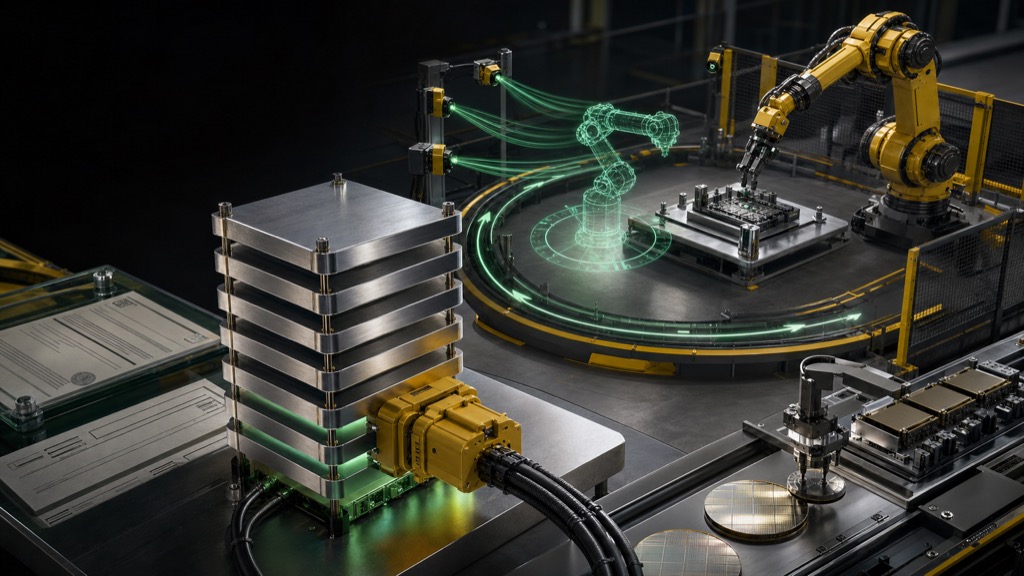
The most important AI companies are starting to look less like normal software companies and more like capital allocation machines.
Zhipu AI is the latest signal. Reuters reported that the Hong Kong-listed model company was seeking nearly US$4 billion through a share placement: 19.78 million new shares at HK$1,588 each, or about HK$31.4 billion.
The financing matters less as a stock-market event than as an operating signal. AI model labs are becoming capital-stack companies: their roadmap depends on how well they can turn financing into training capacity, inference capacity, data work, product distribution, and acquisitions without letting compute spend outrun business quality.
The Capital-Stack Test
For operators, the useful question is not "did an AI company raise a large number?" It is "what system does the money fund?"
Zhipu's HKEX prospectus gives the clearest answer. The company reported 2024 revenue of RMB 1.409 billion and gross profit of RMB 762.3 million. It also said it served more than 80 million monthly active users and over 45,000 business customers in the first half of 2025.
That is not just a research-lab profile. It is a company trying to connect foundation models, consumer usage, enterprise customers, agents, infrastructure, and public-market financing.
The prospectus also shows where the capital pressure lives. Zhipu said about 50% of its HK$4.17 billion net IPO proceeds would go to technology development and enhancement. The listed uses included foundation model advancement, AI agents, data annotation, alignment, training clusters, networking, and other infrastructure.
That is the operating model in one paragraph: model quality, product surface, customer adoption, and compute infrastructure are no longer separate budgets. They are one capital stack.
Why This Matters Now
The first AI wave rewarded model demos. The next phase rewards balance-sheet design.
A model lab that wants to compete must fund several loops at once:
- training and post-training for better model capability
- inference capacity for real users and enterprise customers
- application layers that turn models into workflows
- data, alignment, and evaluation systems that keep quality improving
- acquisitions or partnerships that fill product and distribution gaps
If one loop gets starved, the whole system weakens. Great models without distribution become demos. Distribution without compute becomes latency and margin pressure. Compute without customer workflow depth becomes expensive utilization theater.
Zhipu's placement is useful because it makes that tension visible in public. Reuters reported that proceeds would enhance AI product offerings and fund investments and acquisitions. The prospectus already pointed toward model work, agents, data, alignment, and infrastructure. Together, those sources describe a company treating capital as a product input.
The Operator Read
Teams evaluating AI vendors should read financing events as architecture clues.
Ask three questions.
First: does the company have a clear compute-to-product path? Capital should map to product capabilities, not just larger training runs.
Second: does usage create leverage or more burn? Zhipu's reported user and business-customer base gives it distribution, but every AI company still has to prove that usage can be served economically.
Third: does the company have a portfolio strategy? If proceeds support acquisitions, the real question is whether acquired capabilities become integrated workflow products or remain disconnected assets.
This is also a founder signal. Many AI startups will not be able to compete by building foundation models from scratch. The opening is around the layers that capital-heavy labs need: evaluation, cost controls, enterprise deployment, workflow integration, vertical data, security, compliance, and observability.
The Takeaway
Zhipu's reported raise is not proof that every AI lab can finance itself through public markets. It is a reminder that AI competition is moving beyond model announcements.
The durable winners will not be the companies that simply raise the most. They will be the ones that convert capital into a tighter operating loop: better models, cheaper serving, stronger workflow products, clearer customer value, and disciplined infrastructure spend.
In AI, capital is becoming part of the stack.