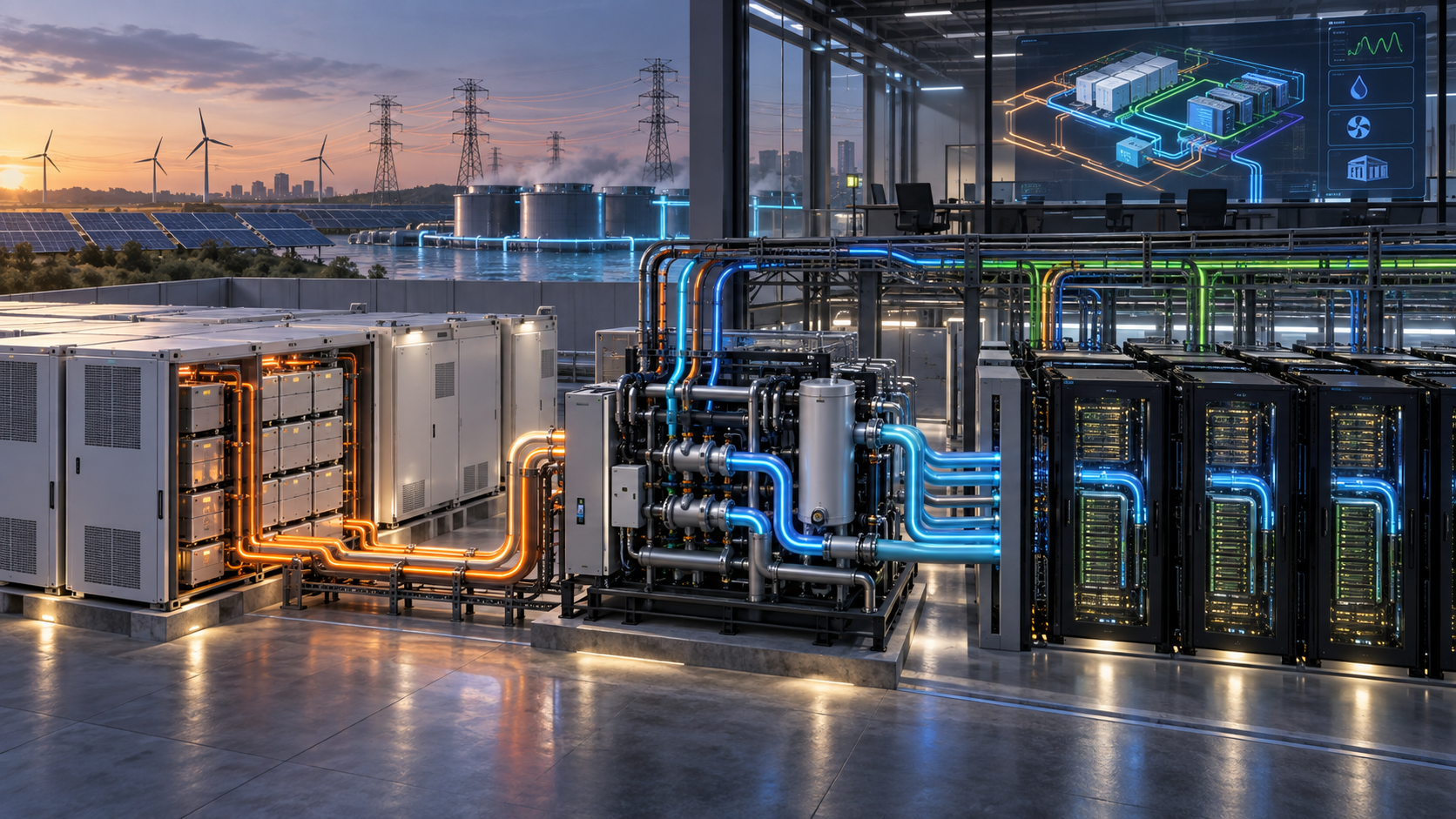
NVIDIA has introduced DSX Ready, a qualification program for partner products and solutions that meet applicable requirements from its DSX AI factory reference designs. The move extends the qualification concept into infrastructure categories that determine how an AI factory operates within available power, cooling, water and grid constraints.
The central operational idea is system-level alignment. Instead of treating compute, networking, facilities, power, cooling and software as isolated domains, DSX presents them as connected parts of one factory design and operating model.
What the evidence says
NVIDIA Blog describes DSX Ready as a way for partners to qualify offerings against applicable DSX reference-design requirements and for builders to discover and evaluate those offerings more clearly.
At launch, the program includes qualified battery energy storage system products from Hitachi Energy, LG Energy Solution and Tesla. It also includes qualified coolant distribution unit products from LG Electronics, LiquidStack and Vertiv.
The underlying DSX platform is presented as unifying AI factory design and operations across compute, networking, power, cooling, facilities and software. The stated objective is to help partners design and operate the factory as one system while working within available infrastructure constraints.
Operator implications
The operator interpretation is that infrastructure qualification is becoming part of the AI factory architecture rather than a separate facilities exercise. A reference design can provide a shared frame for evaluating whether power and cooling products fit the wider system NVIDIA describes.
For builders, the concrete move is to examine qualified components in relation to the applicable DSX requirements and the factory’s own constraints. Qualification may narrow the field of products presented for evaluation, but the announcement does not establish that every qualified offering will suit every site or operating condition.
For suppliers, the program creates a stated path from DSX reference designs to qualified offerings. Operationally, that makes compatibility with the broader factory design a visible consideration alongside the individual function of a battery energy storage system or coolant distribution unit.
The broader insight is organizational: power, cooling, water and grid limits are positioned inside the same system model as compute and networking. That framing may help operators structure evaluation around the complete factory rather than around disconnected component categories.
Limits and open questions
This is a single primary account and is not independently confirmed. The available evidence establishes NVIDIA’s description of the program, its stated purpose and the named qualified suppliers at launch; it does not provide independent validation of those claims.
The account does not specify the complete qualification criteria, testing methods, assessment duration or site-specific evaluation process. It also leaves unknown how builders will use the program, how broadly qualified products will be adopted, and what measurable operational outcomes they may produce. Qualification should therefore be understood here as a program status described by NVIDIA, not independent proof of performance in a particular deployment.